.webp) questrated.com
questrated.comHow Many Dudes? Review: A Chaotic Roguelike Where Bigger Armies Create Bigger Problems
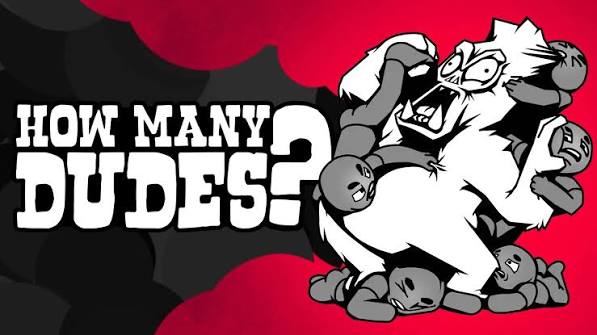
How Many Dudes? is one of those games that sounds like a joke until you actually play it and realize there is a surprisingly thoughtful strategy system underneath the absurd premise. The central question is deliberately ridiculous: how many dudes does it take to defeat a gorilla, a swarm of bees, a horse-sized duck, a thousand toddlers, or eventually something as outrageous as a god? Developed and published by Butterscotch Shenanigans, the game turns that question into a roguelike autobattler focused on recruitment, team composition, synergies, relics, resource management, and increasingly chaotic battles. The game officially released on July 30, 2026, and its current Steam listing describes it as a casual, indie, strategy, and free-to-play title.
What makes How Many Dudes? interesting is that the humor is not simply decoration. The ridiculous characters and enemies provide the framework for a system where players constantly ask whether adding another unit will actually improve their army. More dudes do not automatically mean a better team. A poorly constructed army can collapse quickly, while a carefully designed combination of units and relics can turn a seemingly impossible fight into a spectacular victory.
This review explores how How Many Dudes? works, what makes its gameplay compelling, where its weaknesses appear, who should play it, and whether the game is worth your time.
What Is How Many Dudes?
How Many Dudes? describes itself as a roguelike "dudebuilder," which is an appropriate name for a game centered almost entirely around building an army of strange characters. Rather than controlling one hero directly, the player manages a growing roster of dudes and watches the resulting team battle automatically.
The official game description emphasizes simulated chaos and game-breaking synergies. Players enter the Dude Ranch, recruit different characters, assemble teams, collect powerful items, and attempt to survive increasingly difficult encounters.
The concept is simple enough for almost anyone to understand:
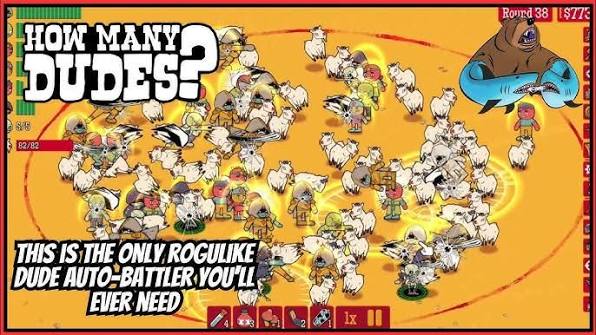
- Recruit dudes.
- Build a team.
- Improve the team.
- Fight increasingly ridiculous enemies.
- Discover powerful combinations.
- Survive long enough to reach the final challenges.
The simplicity is intentional. How Many Dudes? is not trying to become a complicated traditional strategy RPG with dozens of buttons and real-time movement controls. Instead, its strategic depth comes from decisions made before and between battles.
The game currently features 42 unique Dude types divided across six families: Undead, Employed, Warrior, Fantasy, Sci-Fi, and Action. The developer also advertises more than 850,000 possible team compositions, making experimentation a major part of the experience.
The Core Gameplay Loop
At the heart of How Many Dudes? is a classic roguelike progression loop.
You start with a relatively modest collection of units. As the run progresses, you gain access to new dudes, relics, trinkets, resources, and encounters. Every choice affects what your army can accomplish later.
This creates a familiar roguelike tension: do you improve what is already working, or gamble on a new strategy?
A strong team early in a run may become mediocre later if it lacks the necessary synergy. Conversely, a seemingly weak unit can become extremely powerful after receiving the right relic or being combined with complementary characters.
The basic loop can be summarized as:
- Recruit new dudes.
- Organize your team.
- Choose upgrades and rewards.
- Fight automated battles.
- Manage surviving and defeated units.
- Build stronger synergies.
- Prepare for increasingly powerful enemies.
The battles themselves are largely automated, which makes preparation extremely important. Your decisions before combat determine whether your army succeeds.
That structure will immediately appeal to players who enjoy roguelite autobattlers. It also explains why the game can initially appear almost too simple. Much of the strategy happens outside the actual battle.
Recruiting Your Army
Recruitment is arguably the most important part of How Many Dudes?
The game contains 42 unique Dude types, and each one has a specific role. Some specialize in damage, some provide defensive support, while others influence the behavior or statistics of the rest of your army.
The six broad Dude families help create recognizable archetypes:
- Undead Dudes
- Employed Dudes
- Warrior Dudes
- Fantasy Dudes
- Sci-Fi Dudes
- Action Dudes
The important point is that the game does not expect you to collect everything indiscriminately.
A good roster needs a purpose.
For example, a team built around fragile high-damage characters may destroy enemies quickly but collapse when opponents survive long enough to attack. A defensive composition may survive almost anything but lack the damage necessary to finish difficult encounters.
The best builds therefore tend to combine several functions.
Damage Dealers
Damage-oriented dudes are responsible for eliminating enemies before the opposing army overwhelms your team.
These units are particularly useful against powerful individual enemies and bosses. However, stacking too many offensive characters can leave your army vulnerable.
Tanks and Defenders
Defensive dudes absorb damage and protect more vulnerable members of the team.
Their importance becomes increasingly obvious when battles become longer. A powerful attacker does not matter if it is defeated before it can contribute.
Support Units
Support characters are often less impressive at first glance, but they can dramatically increase the effectiveness of an entire team.
A support dude that improves several other units may ultimately provide more value than simply recruiting another attacker.
Specialists
Some dudes exist specifically because of their unusual mechanics.
These are the characters that make experimentation so enjoyable. The developer highlights examples such as Zombie Dudes that can explode when struck, Ninja Dudes that throw shurikens, and Cowboy Dudes that can lasso other characters out of danger.
These unusual mechanics are where much of the game's personality comes from.
Synergy Is More Important Than Quantity
The title How Many Dudes? naturally encourages players to think that bigger numbers are always better.
They are not.
This is one of the game's cleverest design ideas.
A huge army without synergy can perform worse than a smaller group built around a coherent strategy. The game encourages players to consider how units interact rather than simply choosing whichever character appears strongest.
For example, a unit that becomes more powerful when allies are defeated can create a completely different strategy from a conventional defensive team.
Similarly, an explosive undead build may want to maximize opportunities for enemies to attack certain units, while a stealth-oriented strategy may attempt to keep important characters alive as long as possible.
The result is a game where the question changes from:
"How many dudes can I recruit?"
to:
"Which dudes should I recruit together?"
That distinction is what gives the game its strategic identity.
Relics and Trinkets
The second major component of team-building is the game's collection of Relics and Trinkets.
According to the Steam listing, the game contains hundreds of Relics, Trinkets, and Wandering Dude events that can dramatically reshape a run.
These items are important because they allow players to transform ordinary units into specialized components of a larger strategy.
A relic can potentially change how a particular Dude behaves, alter an important interaction, or make an unconventional build suddenly viable.
The official examples are deliberately humorous. Wizard Dudes can receive effects that make them behave differently, while Samurai Dudes can receive unusual upgrades such as a Taser.
That humor serves a gameplay purpose.
You are constantly asking:
"What happens if I combine this completely ridiculous item with that completely ridiculous Dude?"
Sometimes the answer is surprisingly powerful.
Combat: Simple Controls, Complicated Decisions
Combat in How Many Dudes? is intentionally accessible.
Instead of directly controlling individual units during the fight, you spend most of your time preparing the team and then watching the battle unfold.
This makes the game feel closer to an autobattler than a conventional action RPG.
The advantage is accessibility.
You can focus on:
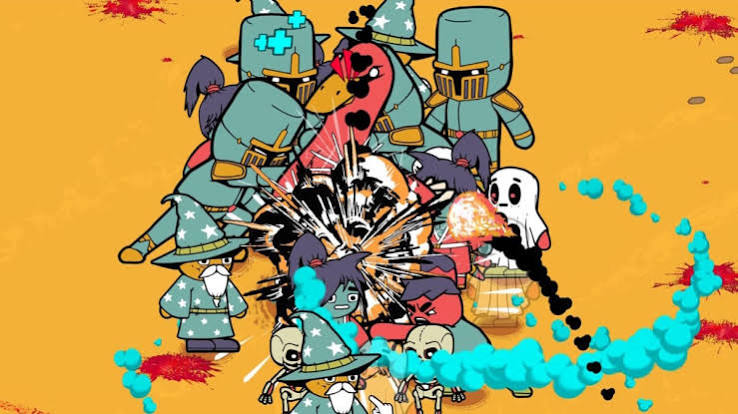
- Team composition
- Unit positioning and roles
- Relics
- Resources
- Recruitment
- Enemy types
- Long-term strategy
Rather than worrying about manual attacks, dodging, or complicated skill rotations, the player concentrates on the larger strategic picture.
This also creates one of the game's biggest weaknesses, depending on your preferences.
Players who enjoy direct control may find the combat too passive. One early hands-on report described the experience as fun but noted that the lack of control over the route and automated nature of combat could sometimes make the player feel like they were simply watching their preparation succeed or fail.
That is not necessarily a design flaw. It is simply an important part of understanding what kind of game How Many Dudes? is.
The Enemies Are Half the Fun
The enemies are deliberately absurd.
Instead of fighting the same collection of conventional fantasy monsters, players encounter challenges built around the game's central joke.
The official description specifically mentions enemies ranging from toddlers and wolves to gorillas and gods.
This creates a refreshing sense of unpredictability.
One moment you might be preparing for a conventional fight. The next, the game presents a ridiculous scenario that forces you to reconsider your strategy.
The PC Gamer preview also highlighted encounters involving bees, oversized ducks, gorillas, and other unusual opponents.
This is where the game's comedy and mechanics work particularly well together.
The enemy design is not merely a collection of jokes. Different enemy configurations can reward different team compositions.
A team that excels against one large target may struggle against a huge swarm of smaller enemies. That means your build needs to account for more than raw damage.
Difficulty and Progression
How Many Dudes? offers three tiers of challenge, with additional enemies and boss encounters introduced as players advance. The game also includes systems for earning stars for individual Dudes by defeating bosses.
This provides a reason to keep experimenting after you understand the basic mechanics.
Instead of simply asking whether you can complete one successful run, you can start asking:
- Can I master a particular Dude?
- Can I build around an unusual family?
- Can I defeat a difficult boss with an unconventional team?
- Can I complete higher challenge tiers?
- Can I discover stronger combinations?
That progression structure is important for a roguelike because the first successful run should not necessarily be the end of the experience.
Game Modes and Replayability
Replayability is one of the strongest arguments for How Many Dudes?
The game includes modes such as The Daily Dude and Ensemble Mode, with Ensemble Mode allowing players to pre-select a dream team.
The procedural nature of runs also helps keep individual sessions from becoming identical.
Different recruits, relics, events, and enemies can push players toward different strategies.
This is especially valuable for players who enjoy roguelites because the appeal is rarely about seeing one fixed campaign from beginning to end. Instead, the fun comes from adapting to what the game gives you.
The more you understand the underlying mechanics, the more interesting those random decisions become.
Graphics and Art Direction
Visually, How Many Dudes? does not attempt photorealism.
The game uses a colorful, stylized 2D presentation that fits its comedic tone. Steam lists tags including 2D, colorful, cartoon, funny, and stylized.
That is a smart choice.
A realistic presentation would actually weaken the game's personality. The deliberately exaggerated characters and strange enemies make the experience feel more like a playable cartoon than a serious combat simulator.
The art direction also makes it easier to distinguish units and understand the battlefield quickly.
For an autobattler with potentially large groups of characters on screen, visual clarity is more important than graphical complexity.
Sound and Presentation
The presentation works best when it supports the game's comedic identity without becoming distracting.
Because the core gameplay is focused on team construction, the presentation does not need to compete with the strategy system.
The result is an experience that feels lightweight and approachable.
That matters because How Many Dudes? is the sort of game that can be played casually. You can sit down, build an army, watch a ridiculous battle unfold, and experiment with another strategy without needing to invest hours learning complicated controls.
Who Should Play How Many Dudes?
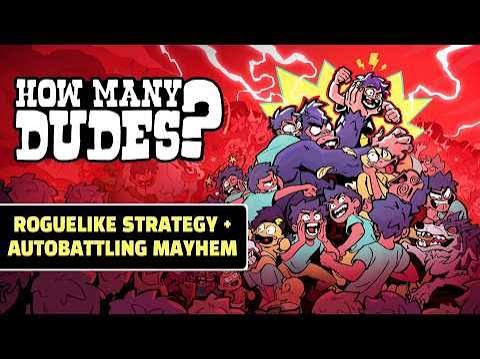
How Many Dudes? is particularly well suited to players who enjoy:
- Roguelikes
- Roguelites
- Autobattlers
- Team-building games
- Strategy games
- Procedural gameplay
- Casual experimentation
- Comedy games
- Games with unusual mechanics
- Build optimization
It is especially appealing if you enjoy games where discovering a broken combination feels like the main reward.
If you have played titles such as other roguelike deckbuilders, autobattlers, or auto-combat games and enjoy experimenting with builds, there is a good chance the game's structure will make sense quickly.
Who Might Want to Skip It?
The game may not be ideal for players who require constant mechanical interaction.
If your favorite strategy games involve carefully controlling every unit, selecting movement paths, manually targeting attacks, or reacting to enemies in real time, How Many Dudes? may feel too passive.
Likewise, players who dislike long roguelite runs may become frustrated with the amount of time required to complete a full attempt.
Early community discussions already show this divide: some players love the game's relaxed, low-input nature, while others find the long runs and limited combat interaction tedious.
That split is useful because it explains the game's appeal very clearly.
How Many Dudes? is not trying to be everything to everyone.
How to Build a Better Team
New players should resist the temptation to recruit every interesting character.
Instead, think about your army as a system.
1. Establish a Core Strategy
Choose one or two ideas that you want the team to accomplish.
For example, you might focus on:
- High single-target damage
- Area damage
- Defensive durability
- Undead interactions
- Stealth
- Sacrifice mechanics
- Support effects
2. Avoid Too Many Unrelated Units
A team with five different ideas may look exciting but often lacks enough synergy to function efficiently.
3. Think About the Enemy
A strategy that destroys one giant boss may be terrible against hundreds of small enemies.
4. Protect Your Best Units
Strong damage dealers are useless if they repeatedly get knocked out before they can contribute.
5. Treat Relics as Build Pieces
Do not always choose an item simply because it looks powerful.
Ask whether it improves your existing strategy.
6. Experiment
The biggest mistake is assuming that only obvious combinations are useful.
The game's design encourages unusual builds, and some of the most entertaining strategies come from combining mechanics that initially seem incompatible.
Is How Many Dudes? Free?
The current Steam listing categorizes How Many Dudes? as Free To Play, while also providing a demo listing and the full game's current store information.
The official developer page confirms the game's July 30, 2026 availability date.
Because pricing and platform availability can change, players should check the official store listing before downloading or purchasing anything.
For PC players, Steam lists relatively modest system requirements: Windows 10 or 11, a 2.0 GHz processor, 2 GB of memory, a graphics card with 512 MB of video memory, DirectX 11, and about 500 MB of storage.
That makes the game accessible even to players without high-end gaming hardware.
How Many Dudes? Rating
Overall Rating: 8.5/10
CategoryRatingGameplay8.5/10Strategy8.5/10Replayability9/10Humor9/10Visual Style8/10Accessibility9/10Combat Interaction7/10Build Variety9/10Overall8.5/10
The rating reflects the game's strengths as a roguelike autobattler rather than comparing it with traditional action or strategy games.
Its biggest strength is its combination of simplicity and experimentation. Its biggest weakness is the limited amount of direct player control during combat.
Final Verdict: Is How Many Dudes? Worth Playing?
How Many Dudes? is much more than its deliberately silly title suggests.
Underneath the jokes is a well-structured roguelike team-building system that rewards experimentation, planning, and understanding how different characters interact. The 42 Dude types, hundreds of Relics and Trinkets, multiple challenge tiers, procedural encounters, and additional modes give the game a solid foundation for repeated play.
The game's most successful design decision is also its funniest: it takes the absurd question of "How many dudes?" completely seriously.
How many dudes do you need?
Maybe ten.
Maybe fifty.
Maybe several hundred.
Or perhaps the correct answer is not more dudes at all, but better dudes.
That is ultimately what makes the game work. The goal is not simply to build the largest army possible. The goal is to understand how each character contributes to the larger machine, then create a combination powerful enough to survive whatever ridiculous challenge comes next.
There are legitimate weaknesses. The automated combat can feel passive, runs can be lengthy, and early player feedback suggests that some balance and pacing issues may limit long-term appeal for certain players. But those concerns do not erase the game's central strength: it is unusually easy to understand while offering enough build experimentation to keep strategy-minded players occupied.
For players who enjoy roguelites, autobattlers, casual strategy games, and absurd comedy, How Many Dudes? is an easy recommendation. It does not need complicated mechanics or photorealistic graphics to stand out. It has a funny idea, a clear gameplay loop, a surprisingly deep synergy system, and enough randomness to make each run feel different.
Final Rating: 8.5/10 — Recommended.
When your carefully assembled army finally defeats an opponent that should have been impossible to beat, the answer to the game's central question becomes wonderfully obvious:
As many dudes as it takes.