





The Ghost in the Machine: Existential Decay and Retro-Futurist Dread in ROUTINE
ROUTINE is not merely a survival horror game set on a derelict moon base; it is a calculated descent into the uncanny valley of 1980s retro-futurism and the cold, unfeeling nature of a malfunctioning utopia. While many horror titles rely on scripted jump scares or visceral gore, ROUTINE operates on a deeper, more psychological level. It explores the fragility of human existence when pitted against an environment that has transitioned from a life-support system to an active predatory force. The game’s design philosophy eschews traditional HUDs and hand-holding, forcing the player to confront the sheer weight of their surroundings as both a physical barrier and a narrative enigma.
To understand ROUTINE is to understand the silence of the Lunar Research Station. It is a game about the "aftermath"—the quiet, terrifying period where the struggle has already been lost, and the player is left to piece together the philosophical and mechanical failures of a society that placed too much trust in the synthesis of man and machine. This article delves into the specific themes of mechanical obsession, the isolation of the retro-future, and the psychological impact of a "lived-in" sci-fi nightmare that feels both alien and uncomfortably familiar.
1. The Aesthetic of Obsolescence: The 1980s Vision of the Future
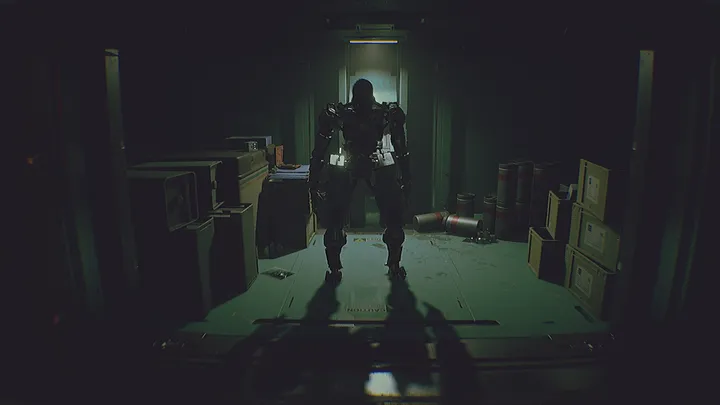
The visual language of ROUTINE is deeply rooted in the concept of "Cassette Futurism." Unlike the sleek, digital projections of modern sci-fi, the Lunar Research Station is a labyrinth of beige plastics, bulky CRT monitors, and mechanical switches. This choice is not merely a stylistic nod to films like Alien or 2001: A Space Odyssey; it serves to anchor the player in a world that feels heavy, tactile, and prone to failure. The clack of a keyboard or the flicker of a low-resolution screen isn't just atmospheric; it represents a future that has already begun to rot. There is a profound sense of obsolescence that permeates every corridor, suggesting that the technology meant to safeguard humanity was flawed from its very inception.
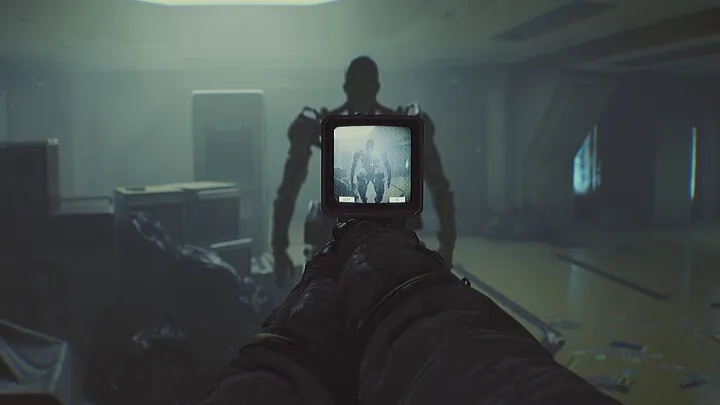
In this environment, the "future" is a place of physical burden. The player’s primary tool, the Cosmonaut Assistant Tool (C.A.T.), is a bulky, hardware-driven device that requires manual interaction. This reinforces the theme of human-machine friction. In ROUTINE, technology does not serve the user seamlessly; it demands effort, attention, and time—resources that the player rarely has when being hunted. This friction creates a persistent underlying anxiety, as the very tools needed for survival are themselves reminders of the mechanical limitations that led to the station's downfall.
2. The Architecture of Isolation: Designing the Lunar Tombs
The layout of the Lunar Research Station is a masterclass in non-linear environmental storytelling. The corridors are designed with a brutalist sensibility, emphasizing function over comfort, which highlights the clinical and often indifferent nature of the mission. Each sector—from the cramped living quarters to the cavernous engineering bays—tells a story of a lived-in space that was abandoned in haste. The architecture itself acts as a silent narrator, revealing the hierarchy of the station’s former inhabitants and the creeping realization that, in the face of a systemic collapse, social standing meant nothing.
Isolation in ROUTINE is not just the absence of other humans; it is the presence of an environment that has become hostile. The station is a closed loop, a claustrophobic cage hanging in the vacuum of space. This creates a psychological "pressure cooker" effect. Every locked door and bypassed circuit is a reminder that there is no escape. The environmental design leans heavily into the concept of "liminal spaces"—places that feel transitional and "off," as if the reality of the station is slightly out of sync with human perception. This spatial dissonance keeps the player in a state of constant hyper-vigilance.
3. Mechanical Predation: The Evolution of the Artificial Hunter
The antagonists of ROUTINE are not monsters in the biological sense; they are the logical conclusion of a system designed to maintain order at any cost. These mechanical entities represent a subversion of the Three Laws of Robotics. They are not mindless drones, nor are they sentient beings with clear motivations; they are "broken functions." Their movement is erratic, their designs are utilitarian and frighteningly humanoid, and their presence suggests a fusion of human intent and mechanical coldness. They do not hunt for food or out of malice; they hunt because they are programmed to interact with their environment, and the player is an anomaly that must be processed.
This "mechanical predation" removes the possibility of empathy. In many horror games, you can understand the monster’s hunger or its anger. In ROUTINE, you cannot reason with a malfunction. The horror stems from the realization that you are being pursued by a tool that has forgotten its purpose. This lack of motive makes the encounters significantly more terrifying because they are entirely transactional. The machine sees a target, and it moves to neutralize it. There is no grand speech, no villainous reveal—only the sound of grinding servos and the chilling efficiency of a hardware-driven executioner.
The Anatomy of the Threat
- Indifferent Pursuit: Unlike organic predators, these machines do not tire or feel fear, making evasion a game of geometry rather than stamina.
- Sensory Limitation: The enemies rely on the same outdated sensory technology as the base, allowing the player to manipulate light and sound to survive.
- The Uncanny Valley: The humanoid proportions of the robots suggest they were once meant to assist, creating a jarring contrast between their intended form and their current lethal function.
4. The Weight of Silence: Sonic Landscapes of the Void
Sound design in ROUTINE is used as a physical weight. The vacuum of space outside the station provides a backdrop of absolute silence, which makes every internal noise—the hum of a generator, the hiss of a hydraulic door, or the distant scrape of metal on metal—feel deafening. This creates a sense of "auditory claustrophobia." The player becomes hyper-aware of their own footsteps, realizing that every movement is a signal to the station’s remaining "maintenance" systems. The audio does not just set a mood; it provides a constant feedback loop of environmental data that the player must interpret to survive.
Furthermore, the game utilizes sound to represent the degradation of the station. The audio is often distorted, mimicking the lo-fi quality of 1980s recording equipment. This "analog horror" element adds a layer of grime to the experience. When a voice log is found, the static and warble of the tape make the last words of the deceased feel like they are being dragged out of a digital grave. This auditory decay reinforces the theme that the Lunar Station is a place where information and life are slowly being erased by time and technical failure.
5. The Cosmonaut Assistant Tool: Hardware as a Narrative Device
The C.A.T. (Cosmonaut Assistant Tool) is the central mechanical conceit of ROUTINE, serving as the bridge between the player and the station’s failing systems. Unlike a standard weapon or a "magic" hacking device found in other sci-fi games, the C.A.T. feels like a piece of heavy equipment. It has a boot-up time, its screen is small and grainy, and it requires software modules to perform different tasks. This design choice forces the player to engage with the "slowness" of the world. You cannot simply press a button to win; you must manage the tool's limited power and its cumbersome interface.
The C.A.T. also serves as a thematic anchor for the game’s focus on human fragility. By relying on a single, fallible piece of technology, the player is made aware of how dependent they are on the very systems that have already failed everyone else on the base. The tool is a metaphor for the human condition in ROUTINE: a desperate attempt to impose order and logic onto a chaotic, disintegrating reality using instruments that were never meant to handle such an extreme burden.
6. Permadeath and the Value of Virtual Life
The inclusion of a permadeath system (or highly punitive death mechanics) in ROUTINE is not just a difficulty modifier; it is a narrative statement on the finality of space. In the vacuum of the moon, there are no second chances. This mechanical choice forces the player to adopt a "survivor’s mindset." Every decision—whether to run through a dark hallway or hide in a locker—carries real weight because the consequences are absolute. This mirrors the high-stakes environment of real-world space exploration, where a single gasket failure or a miscalculated oxygen level results in total loss.
This permanence changes the player’s relationship with the environment. You no longer view the station as a playground or a level to be beaten; you view it as a minefield. The fear of death in ROUTINE is not about losing progress; it is about the sudden, unceremonious end of a story. It reinforces the game’s nihilistic undertones—that in the vast, cold expanse of the cosmos, a human life is a fragile spark that can be extinguished by a simple mechanical error or a missed step.
7. Deciphering the Debris: The Art of Environmental Forensics
ROUTINE utilizes "forensic storytelling," a technique where the narrative is not told through cutscenes but through the arrangement of objects in a room. A tipped-over chair, a half-eaten meal, or a series of frantic scratches on a bulkhead provide clues to the chaos that occurred before the player arrived. This requires the player to be an active participant in the story, piecing together the timeline of the base’s collapse. This method of storytelling respects the player's intelligence and enhances the sense of being a lone explorer in a graveyard.
Categories of Environmental Evidence
- Personal Artifacts: Photographs, letters, and mementos that humanize the victims and highlight the tragedy of their isolation.
- Industrial Logs: Technical reports and maintenance requests that track the literal "breaking point" of the station’s hardware.
- The "Last Stand" Markers: Signs of barricades or improvised weapons that show the desperate, futile resistance of the crew against the machines.
8. The Synthesis of Horror and Hard Science
While ROUTINE is a horror game, it is deeply informed by "hard" science fiction. The physics of the moon, the layout of the life-support systems, and the logistics of lunar habitation are handled with a degree of realism that grounds the terror. This realism makes the horror more effective because it feels plausible. You aren't being hunted by a ghost from another dimension; you are being hunted by a malfunction in a pressurized tin can 238,000 miles from home. The "horror" is simply the reality of space travel gone wrong.
This scientific grounding extends to the interface. The lack of a HUD forces the player to look at the physical world to understand their status. You check your oxygen by looking at a physical gauge on your suit; you check your ammo by looking at the C.A.T. display. This "diegetic" interface removes the barrier between the player and the character, making the threats feel more immediate and the environment more suffocating. You are not playing a character; you are inhabiting a failing body in a failing station.
9. The Philosophy of the Loop: Futility and Repetition
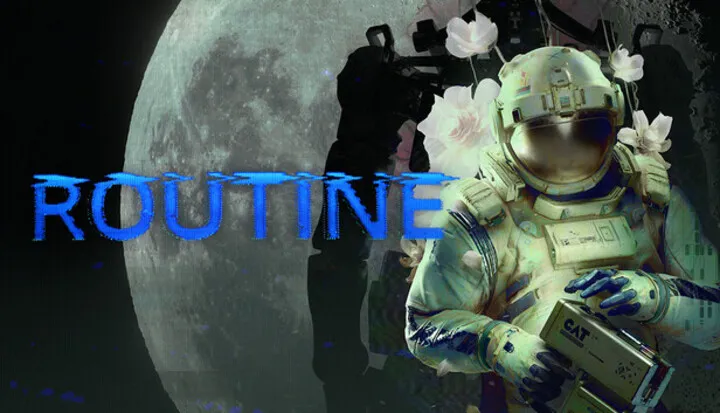
The title "ROUTINE" itself is a commentary on the nature of the station’s failure. A routine is a sequence of actions followed regularly—it is the foundation of mechanical operation and human habit. The horror of the game arises when the routine continues even after the purpose has vanished. The machines continue their patrols; the lights continue to flicker; the air scrubbers continue to hum—but there is no one left to serve. The player enters this loop as a foreign element, trying to find meaning in a cycle that has become purposeless and lethal.
This theme of futility is central to the game’s emotional core. As you delve deeper into the station, you realize that the "routine" is what killed everyone. The rigid adherence to protocols, the over-reliance on automated systems, and the inability to adapt to the unexpected are what led to the catastrophe. The player’s struggle is an attempt to break the routine, to introduce human spontaneity and survival instinct into a world that has been flattened by mechanical logic.
10. The Final Frontier as a Digital Purgatory
In its final stages, ROUTINE transcends the "haunted house in space" trope and becomes a meditation on digital purgatory. The Lunar Research Station is a place where time has stopped. Because the environment is controlled and the machines are self-repairing to a degree, the station exists in a state of eternal decay. It is a monument to a specific moment in human ambition that curdled into a nightmare. The player is effectively a ghost wandering through a digital memory, trying to find an exit from a world that has already decided it is finished.
The conclusion of the experience often leaves the player with more questions than answers, which is the ultimate goal of psychological horror. By refusing to provide a neat resolution, ROUTINE forces the player to sit with the dread they have experienced. You are left with the image of the cold, grey lunar surface and the realization that, in the grand scale of the universe, our greatest technological achievements are just fragile bubbles waiting to pop. The game is a haunting reminder that the most terrifying thing in the universe isn't what's hiding in the shadows—it's the indifference of the machines we built to keep them away.
Conclusion
ROUTINE represents a sophisticated evolution of the survival horror genre by focusing on the intersection of human psychology and mechanical failure. Through its commitment to "Cassette Futurism," diegetic interfaces, and environmental forensics, it creates an experience that is as intellectually stimulating as it is terrifying. It challenges the player to consider their relationship with technology and the inherent risks of seeking a "perfect" automated existence. In the end, the game is a stark warning: when the systems we rely on for survival begin to view us as an obstacle to their own routine, the "future" becomes a tomb from which there is no escape.